
FSB launches new business support policy report

Almost two thirds (64%) of small firms in England say business support has made a positive difference to their business, yet many continue to face significant barriers getting the help they need, according to new research.
A new policy report from the Federation of Small Businesses (FSB) exploring what good business support looks like, and how existing and future support across England could be developed to deliver more, has today been published.
The report: ‘Big Support for Small Business – What Businesses Really Need’, looks at how current business support is delivered across England, where there are gaps, and what changes could be made to ensure more small firms can access and understand what’s being offered.
It also examines ways business support could be made simpler to access and more consistent in delivery across the country so fewer businesses fall through the cracks and access what they need, ultimately helping to deliver growth in the wider economy.
Based on a survey of nearly 700 businesses, and additional data from dozens of roundtables with business owners as well as local councils and growth hub teams who deliver current support models, the report makes 10 recommendations to help ensure every pound spent supporting firms, is money well spent and gets to the right businesses at the right time.
Whilst cost remains the single top barrier that would prevent small firms from accessing the support needed, the combined practical issues of difficulty finding and accessing support (39%) lack of time (33%) lack of in person/local option (23%) are larger and perhaps a greater concern.
Richard Askew, FSB’s English Policy Unit’s chair, said: “Business support is help and advice for businesses to start, grow and thrive. But in England, the business support ecosystem can be complex, fragmented and difficult to navigate for the uninitiated or those just starting out.
“Political and economic changes mean business support is now at a crossroads. This provides the opportunity to improve the support business owners get but presents the risk we miss a chance to improve our productivity and boost our economy.
“This support is especially crucial to small and medium businesses who are the foundation of our economy. Making up over 99 per cent of all business in the UK, it is small and medium firms who create the enterprise, innovation and job creation needed for thriving communities.”
As well exploring why business chose the support they do, with Trusted Relationship being the clear most important reason (34%) the report provides 10 Key Recommendations, in short below:
Key Recommendations
1 – Strategic and local authorities should: Include a dedicated multi-year business support strategy in every local growth plan.
2 – UK Government should: Realise the ambition for the Business Growth Service and work with strategic and local authorities to create a universal business support triage system that allows all businesses within an area to better understand and access the support they need.
3 – Strategic and local authorities should: Prioritise a business support strategy which puts existing entrepreneur networks and relationships at its core.
4 – The UK Government should: Develop a transparent funding formula for business support that takes account of business population, geography, levels of economic disadvantage, entrepreneurial activity, business performance indicators and existing ecosystem capacity.
5 – The Business Growth Service and strategic and local authorities should: Facilitate systematic information sharing and signposting activity so there is ‘no wrong door’ for a business seeking support.
6 – Strategic and local authorities should: Employ Business Advisors to deliver strategies on business engagement and support.
7 – Strategic and local authorities and business support providers should: Design business support programmes which are flexible, targeted and inclusive.
8 – The UK Government should: Move business support funding frameworks from single-year, to multi-year arrangements.
9 – The Business Growth Service and UK Government should: Work with Strategic Authorities to introduce a national standard measurement of success for business support which focuses on outcomes rather than outputs.
10 – Strategic and local authorities and business support providers should: Redesign business support provision around what business say they need and place a greater emphasis on resilience and survival.
FSB’s field staff and policy teams will now be working with business support stakeholders across England to help shape and guide new – and existing – support programmes to better reflect the intel and advice contained in the report for better overall outcomes.
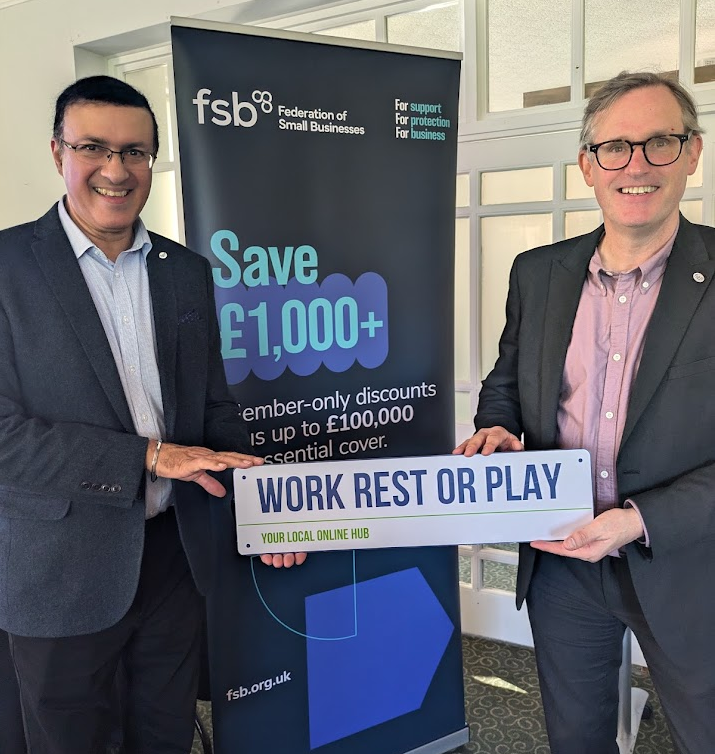
Askew added: “Decisions taken now will shape the support environment for small businesses and entrepreneurs for years ahead.
We believe our new paper will help state-funded support providers be better, informed by robust evidence and grounded in the experiences of the people they are designed to serve.
“As the UK’s leading voice for small businesses and the self-employed, FSB is uniquely positioned to contribute to this conversation.
“The businesses that policymakers are seeking to support are the businesses FSB represents every day. Understanding their experiences, priorities and frustrations is central to ensuring support systems are designed around genuine business, not institutional assumptions.”